


Choose work gloves according to the task, the hazards to your hands and the conditions at the workplace. This category includes models for different needs, from precision handling and demanding tasks to protection against impacts, cuts, cold and work in wet conditions. A product type is a useful starting point, but it does not establish the level of protection.
When comparing gloves, check each model’s specifications, fit and the grip required. Consider how much finger dexterity the task needs and how long the gloves will be worn. For work with specific safety requirements, documented performance and suitability for the actual hazard are decisive.


Need help choosing?
Send us an inquiry about quantity, personalization or choosing a suitable product.
Which type of glove suits your work?
Impact and cut hazards are different
If the task involves a risk of impacts against objects, consider WKP710 impact protection gloves. Where sharp edges and cuts are the main concern, compare WKP709 protective gloves. Different intended uses do not imply identical protection levels: for each model, check which hazards it is designed for and which performance characteristics have actually been verified.
Cold, moisture and task demands
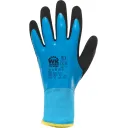
For work in colder conditions, the selection includes the WKP706 winter model, while the WKP703 model is intended for wet conditions. These names alone do not prove waterproofing or chemical resistance. The range also includes WKP701 for more precise handling and WKP702 for more demanding tasks. For both, compare the individual product descriptions rather than assuming protective properties from the type of work alone.
What should you check before ordering?
Protective performance and markings
First establish whether the main hazards are cuts, impacts, abrasion, cold or moisture. If several hazards occur together, check that the chosen model actually meets each requirement. Where the task calls for a specific protection level, consult the markings, test results and manufacturer’s instructions for the exact glove model. A general product name is no substitute for this check.
Fit, grip and daily use
Gloves should fit without being excessively tight or loose. An oversized model can make small items harder to handle, while one that is too tight can restrict finger movement. Grip is especially important when handling damp objects; fingertip sensitivity matters for detailed tasks. For extended wear, also consider comfort and working conditions.
When equipping employees, you can complement your selection with workwear. To coordinate an order, it helps to list the tasks, required sizes and estimated quantities; assess the suitability of each item of equipment separately.
Explore more




Frequently asked questions
Do cut-resistant gloves protect against every sharp object?
No. Cut resistance does not mean complete protection against blades, punctures or all sharp edges. For the planned task, check the documented protection level, test method and limitations of the particular model.
Does “for wet conditions” also mean chemical protection?
Not necessarily. Suitability for wet conditions does not by itself establish protection against detergents, solvents or other chemicals. For such tasks, check the glove’s resistance to the specific substance and the relevant manufacturer’s instructions.
How should glove sizes be selected for several employees?
Use the manufacturer’s sizing chart and each wearer’s hand measurements, rather than relying solely on S, M or L labels. Where possible, check the actual fit too, so that the gloves allow a secure grip and the necessary dexterity.
Can work gloves be branded with a logo?
Branding must be assessed for the chosen model. The material, suitable marking area and the need to avoid reducing protective performance or covering required markings all matter. Gajcom can assess a suitable solution based on the product, artwork and quantity.