


Sports accessories for companies, clubs and event organisers include items for sporting activities as well as supporting equipment. The right choice depends on whether you need something for actual sports use, event organisation or a practical gift for participants.
The active selection includes balls, event wristbands, visibility accessories and items for carrying belongings. Compare products by their intended users, how they will be used and whether suitable branding is possible, rather than by appearance alone.
Subcategories


Need help choosing?
Send us an inquiry about quantity, personalization or choosing a suitable product.
Choose by sport and purpose
For training and sports games, choose an item that suits the activity and its users. The BRYCE football is an example of a product intended for play, whereas event wristbands serve mainly an organisational purpose. Pouches and cooler bags meet different needs, such as carrying small belongings or refreshments; check the actual function of each specific model.
Equipment for teams and recreation
When ordering for a team, identify the sport, user group and expected frequency of use. With balls, check the type, size and purpose of the specific model rather than relying on a photograph. A gift intended for play should suit its recipients, while an organisational accessory should make the activity easier to manage.
Accessories for sporting events
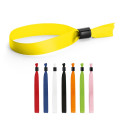
The SECCUR wristband illustrates a different use from training equipment: it may be useful for identifying participants or organising an event. Before choosing, decide whether you need to distinguish groups, give participants a gift or provide an item to use during the activity. This helps avoid choosing something that does not meet the actual need.
Practical criteria for comparing products
Compare sports accessories by function, intended users, carrying method and conditions of use. For children’s products, check the appropriate size, age suitability and instructions for the specific model. If promotion is also a goal, a suitable surface for a logo or message matters.
Fluorescent and reflective accessories
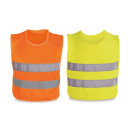
Fluorescent colours improve visibility mainly in daylight, while retroreflective elements return light towards its source when illuminated. A fluorescent band should therefore not automatically be treated as equivalent to a reflective product. The MIKE children’s reflective vest is an example of a different type of accessory; for use in traffic, check the properties and any applicable standards of the specific product.
Carrying and complementary equipment
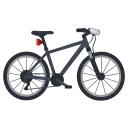
For pouches and cooler bags, consider what users will carry and how they will transport it. For a more focused selection, explore bicycle accessories; for complementary items at training sessions or events, see drinkware. These are related options, not direct substitutes for a particular sports accessory.
Branding for businesses and clubs
A logo can only be added to products whose material, surface and design are suitable for the chosen technique. For a quotation, clarify the quantity, branding position, artwork and desired appearance. Gajcom can help review the artwork and determine an appropriate personalisation method; the options are confirmed for the specific product.
Explore more

Frequently asked questions
Can every sports accessory carry a logo?
No. Products differ in surface, shape and material. The suitability of a logo, the size of the marking and the technique must therefore be checked for the selected model, not assumed for the entire category.
What should I check when choosing accessories for children?
Start with the intended age group, size and way the item will be used. For visibility accessories, check the stated product properties and instructions. A product name or colour alone does not establish any particular level of protection.
Can a fluorescent band replace a reflective accessory?
Not necessarily. Fluorescent materials stand out more in daylight, whereas retroreflective elements work when illuminated by an external light source. If visibility in darkness matters, check the description and suitability of the specific product.
What details should I prepare for a sporting event?
Useful details include the event type, estimated number of participants, target group, selected products, artwork and date of use. This helps establish branding feasibility and availability; the expected delivery date is confirmed for the particular order.