


Aprons help protect workwear during food preparation, service and other tasks where stains are likely. For hospitality teams, they are also a visible part of the uniform, so coverage matters alongside fit and how comfortably staff can wear an apron while working.
When choosing a model, compare the cut, length, fastening, fabric and practical details. The range includes bib aprons and children's models, while tabard aprons for more specialised requirements are presented in a separate subcategory.
Subcategories


Need help choosing?
Send us an inquiry about quantity, personalization or choosing a suitable product.
Apron styles and how they differ in use
Start by deciding how much of the clothing needs covering and whether staff need easy access to pockets or tools. Different cuts are not interchangeable on appearance alone: the main distinctions are body coverage and how the apron is worn.
Bib apron or waist apron?
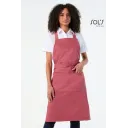
A bib apron also covers the chest, making it useful for tasks where spills may reach above the waist. A waist apron leaves the upper clothing uncovered and can be practical for table service. When considering a particular model, check its length and cut rather than relying on its name alone.
Children's and tabard aprons
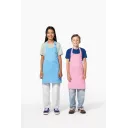
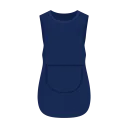
For organised activities with children, a cut suited to smaller wearers matters. One active children’s model is the Kariban K889. For specific tasks in beauty settings, explore the separate tabard aprons subcategory; this style should not automatically be treated as equivalent to a conventional hospitality apron.
What to check about fabric and comfort
Compare aprons by fabric composition, expected use and care instructions. If staff wear them every day, freedom of movement and manageable upkeep also matter. Always verify the properties of the individual product you select.
Fabric and washing instructions
Different fabrics may call for different care. One listed option is the SOL’S Gamma made from organic cotton, but this does not mean other aprons use the same fabric. Check washing labels before ordering and take them into account when planning any printing or embroidery.
Length, ties and pockets
The right length depends on the task and the wearer’s height. Check how the apron fastens, whether its fit can be adjusted and whether any pockets are positioned usefully. Pockets can help hold small work items, but they are not essential for every role.
Consistent staff uniforms and personalisation
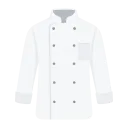
Aprons can form part of coordinated workwear alongside chef shirts and trousers. Printing or machine embroidery of a logo may be available for suitable textile models. The appropriate method depends on fabric, artwork, placement and quantity; not every apron supports every technique.
When requesting a quote, include the chosen model, quantities, intended design and preferred branding position. Feasibility and details are agreed in the quotation or order confirmation.
Explore more
Frequently asked questions
How should we choose apron sizes for a team?
Compare each model’s measurements and fastening method with the different builds of staff members. Where fit is adjustable, check the adjustment range rather than assuming a single size label will suit everyone.
Are children's and adult aprons interchangeable?
Not without checking dimensions and cut. Children's models are identified separately, so for group workshops compare length, coverage and fastening with participants’ ages and heights.
Can we use the same logo on different apron models?
The same design may be a starting point, but each model must be checked for suitable marking area, fabric and branding method. Logo size or placement may therefore vary between models.
How should personalised aprons be cared for?
Follow the care instructions for the specific product and the recommendations for the personalisation method used. One washing or drying temperature should not be assumed suitable for every fabric and branding process.